The latest innovation in the China of robot drive axis.

Latest News
Revolutionize Automation with Robot Linear Motion System
Release time:
Jan 19,2026
The robot linear motion system is transforming modern manufacturing by providing industrial robots with precise linear movement capabilities that significantly expand their operational range
The robot linear motion system is transforming modern manufacturing by providing industrial robots with precise linear movement capabilities that significantly expand their operational range. Unlike traditional six-axis robots limited to a fixed working envelope, a robot linear motion system allows robots to move along a linear track, enabling larger coverage areas, increased flexibility, and enhanced production efficiency. This system is widely applied in automotive, aerospace, electronics, and logistics industries, where complex assembly, material handling, and welding tasks demand extended reach and adaptability.
One of the core advantages of a robot linear motion system is improved workflow efficiency. By integrating a linear axis, robots can perform tasks across extended areas without the need for multiple setups or manual repositioning. This reduces downtime, minimizes human intervention, and ensures consistent quality across all operations. Companies adopting a robot linear motion system can maximize automation performance while lowering labor costs and operational inefficiencies.
The robot linear motion system also offers remarkable adaptability and customization. Tracks can be tailored to specific factory layouts, load capacities, and operational speeds, ensuring seamless integration with existing robotic systems. For example, automotive manufacturers can use long linear tracks for welding or painting along extended assembly lines, while electronics manufacturers can implement compact linear motion systems for precise component handling. This flexibility enables businesses to optimize production and fully leverage their robotic investments.
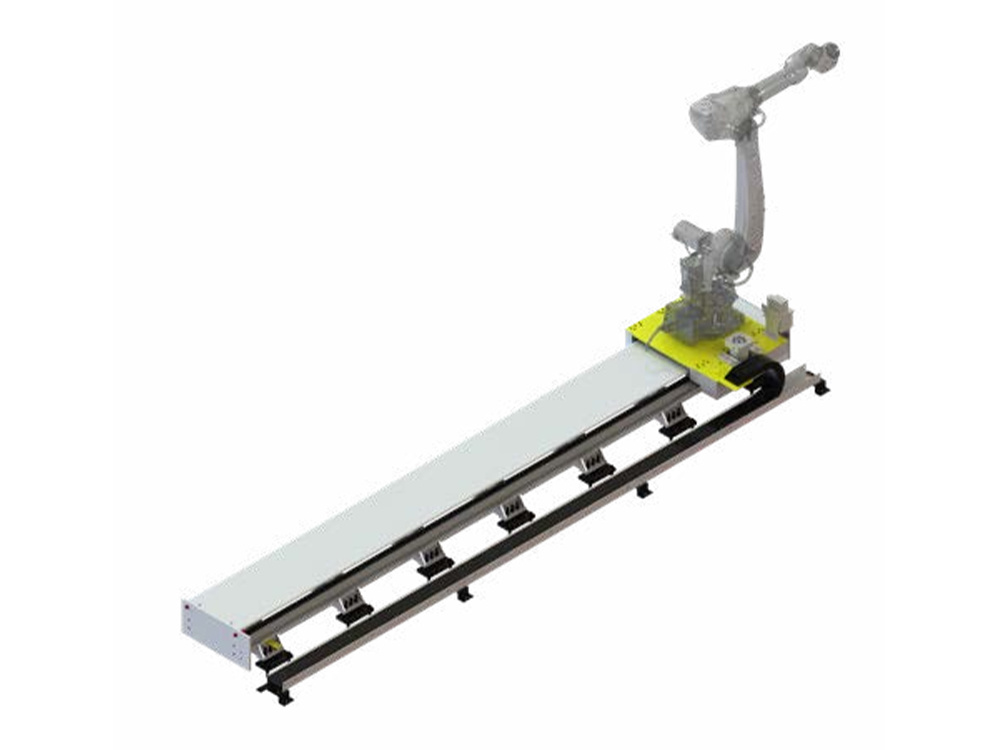
Practical applications of the robot linear motion system include automated welding, machine tending, palletizing, and material transport. In automotive production, robots mounted on linear tracks can traverse the length of a vehicle chassis to perform assembly and welding without multiple robots. In logistics and warehousing, these systems facilitate automated movement of goods across large storage areas, improving throughput and operational efficiency. Companies integrating this system experience higher productivity, greater precision, and reduced operational bottlenecks.
Additionally, the robot linear motion system addresses common industrial challenges, such as limited workspace, rigid automation setups, and production bottlenecks. By adding a linear motion axis, manufacturers can expand the working area of existing robots without extensive facility modifications, providing a scalable and cost-effective automation solution. This combination of precision, flexibility, and scalability makes the robot linear motion system a critical asset for modern industrial automation.
In conclusion, the robot linear motion system enhances robotic mobility, precision, and efficiency, transforming manufacturing operations. By extending the reach of existing robots, it allows businesses to improve workflow, reduce costs, and achieve higher production accuracy. Investing in a robot linear motion system equips companies with the flexibility, reliability, and performance required for next-generation automated production.
keywords
Guangzhou Seventh Axis Intelligent Equipment Co., Ltd.
We provide our products with a golden service team, a quick response mechanism, and lifelong follow-up services, so that you can work together without worry.
Xintai Technology Industrial Park, No. 62 Dachong Road, Nansha District, Guangzhou
GET IN TOUCH
Online Message

puenshi

Guangzhou Seventh Axis Intelligent Equipment Co., Ltd.
Tel: 020-83150912
Mobile phone:+86 18998358207
Email: fjx18998358207@dqzrobot.cn
Address: Xintai Technology Industrial Park, No. 62 Dachong Road, Nansha District, Guangzhou