The latest innovation in the China of robot drive axis.

Latest News
Expand Robotic Capabilities with the Seventh Axis Motion Module
Release time:
Jan 26,2026
The seventh axis motion module is a cutting-edge solution that enhances industrial robots by providing linear movement along an additional axis
The seventh axis motion module is a cutting-edge solution that enhances industrial robots by providing linear movement along an additional axis. By extending the reach of standard six-axis robots, this technology significantly increases flexibility, productivity, and operational efficiency. Industries such as automotive, aerospace, electronics, and logistics benefit greatly from implementing a seventh axis motion module, especially in applications requiring long-range assembly, precise welding, or automated material handling.
One of the primary advantages of the seventh axis motion module is its ability to optimize production workflows. By allowing robots to move along a track, manufacturers can cover larger work areas without repositioning multiple robots. This reduces downtime, enhances process consistency, and minimizes human intervention, allowing companies to maximize automation efficiency while controlling operational costs.
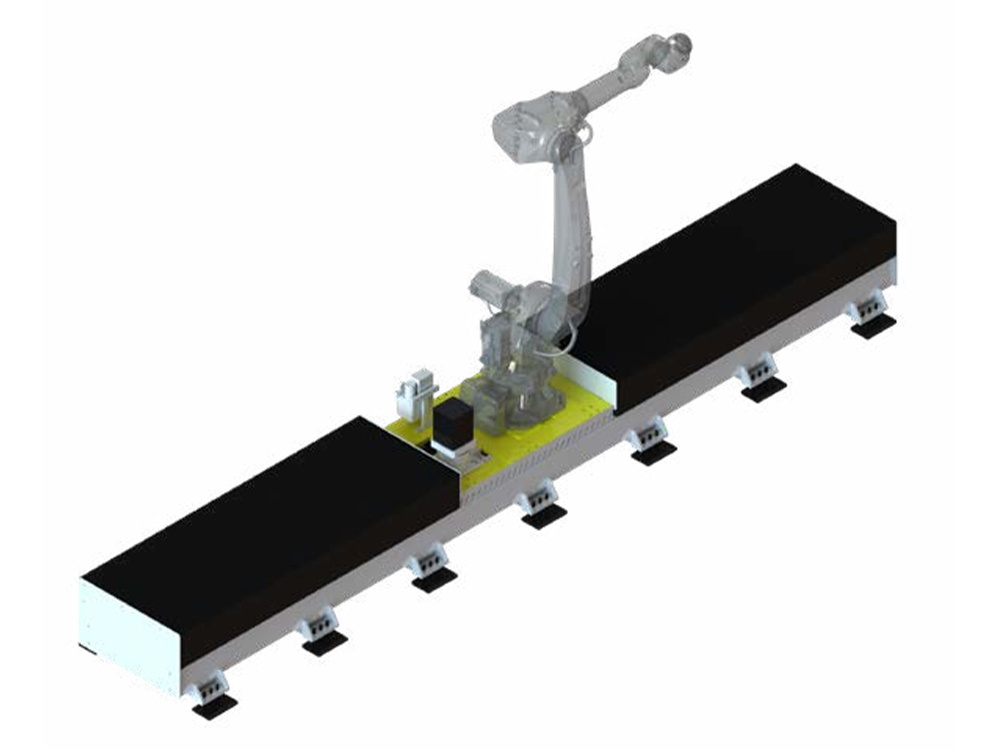
The seventh axis motion module also offers extensive customization. Tracks can be tailored to factory layouts, load requirements, and speed specifications, ensuring seamless integration with existing robotic systems. For example, automotive production lines can utilize the module for continuous welding or painting over long chassis lengths, while electronics manufacturers can deploy compact modules for precision assembly tasks. This adaptability ensures that the seventh axis motion module can meet diverse operational demands.
Practical applications of the seventh axis motion module include automated welding, material transport, machine tending, and palletizing. In automotive manufacturing, robots on a seventh axis module can move along the length of a vehicle body, completing welding or assembly operations without multiple robot stations. In logistics, the module enables efficient automated handling of goods across extended warehouse areas. Companies deploying this technology experience increased throughput, improved precision, and reduced labor costs.
Furthermore, the seventh axis motion module addresses common industrial challenges such as limited workspace, rigid automation setups, and production bottlenecks. By adding a linear motion axis, manufacturers can extend the operational range of their existing robots without major facility redesigns. The combination of precision, flexibility, and scalability makes the seventh axis motion module a critical investment for modern automation systems.
In conclusion, the seventh axis motion module expands robotic capabilities, enhances production flexibility, and improves overall efficiency. By extending the reach of standard robots, it enables large-scale automation, reduces operational bottlenecks, and supports precision manufacturing. Investing in a seventh axis motion module transforms production lines, delivering measurable improvements in throughput, accuracy, and operational efficiency.
keywords
Guangzhou Seventh Axis Intelligent Equipment Co., Ltd.
We provide our products with a golden service team, a quick response mechanism, and lifelong follow-up services, so that you can work together without worry.
Xintai Technology Industrial Park, No. 62 Dachong Road, Nansha District, Guangzhou
GET IN TOUCH
Online Message

puenshi

Guangzhou Seventh Axis Intelligent Equipment Co., Ltd.
Tel: 020-83150912
Mobile phone:+86 18998358207
Email: fjx18998358207@dqzrobot.cn
Address: Xintai Technology Industrial Park, No. 62 Dachong Road, Nansha District, Guangzhou