The latest innovation in the China of robot drive axis.
Latest News
Seamless Automation, Maximum Efficiency: The Advantages of Robot Track Systems
Release time:
Dec 01,2025
Robot track systems have become a vital component in modern industrial automation, offering unmatched precision, flexibility, and efficiency for a wide range of applications. Designed to extend the movement capabilities of robotic arms, these systems provide smooth linear motion, increased reach, and enhanced operational accuracy.
Robot track systems have become a vital component in modern industrial automation, offering unmatched precision, flexibility, and efficiency for a wide range of applications. Designed to extend the movement capabilities of robotic arms, these systems provide smooth linear motion, increased reach, and enhanced operational accuracy. Unlike fixed robotic setups, robot track systems allow manufacturers to optimize production layouts, improve workflow efficiency, and achieve higher throughput, making them essential for businesses striving to stay competitive in today’s automated industries.
One of the primary advantages of robot track systems is their ability to provide extended range and flexibility to robotic operations. By integrating a linear track with a robotic arm, companies can cover larger work areas without compromising speed or precision. High-quality rails, bearings, and motion components ensure stable and reliable operation, reducing downtime and maintenance requirements. The system’s modular design allows easy customization and scalability, enabling operators to adjust the track length, speed, and payload capacity according to specific production needs. This adaptability is particularly valuable in industries such as automotive manufacturing, metal fabrication, logistics, and assembly lines, where varying product sizes and production volumes demand versatile solutions.
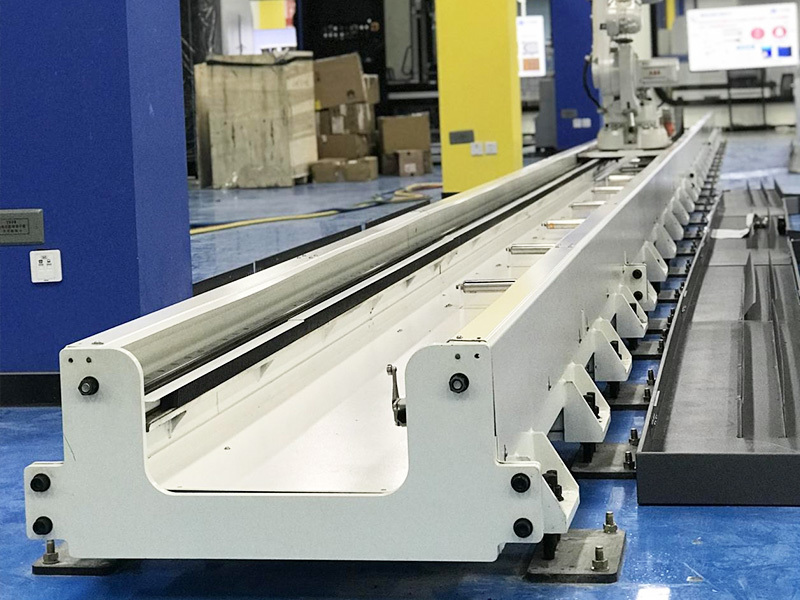
Durability and reliability are central to the design of robot track systems. Constructed from high-strength materials and precision-engineered components, these systems withstand heavy loads, continuous operation, and demanding industrial environments. Advanced control systems allow for precise synchronization between the robot and track, ensuring smooth motion and accurate positioning throughout the production cycle. By minimizing vibrations, reducing wear, and providing repeatable performance, robot track systems enhance both efficiency and product quality.
The practical applications of robot track systems demonstrate their versatility and impact. In automotive production, tracks extend the reach of robotic arms for welding, painting, and assembly, allowing larger vehicle components to be handled efficiently. In logistics and warehousing, track systems enable robots to transport goods across long distances while maintaining speed and accuracy. Metal fabrication shops use robot tracks for cutting, bending, and assembling large materials with minimal human intervention. By solving challenges related to limited workspace, repetitive motion, and production bottlenecks, these systems improve overall operational efficiency and reduce labor costs.
Robot track systems also help businesses address critical challenges in industrial automation. They provide scalable and customizable solutions to accommodate expanding production requirements, reduce downtime caused by inefficient workflows, and enhance safety by limiting manual handling. Companies integrating robot track systems can achieve faster cycle times, higher throughput, and consistent quality while minimizing operational risk. These benefits make the technology a smart investment for manufacturers seeking long-term efficiency gains and competitive advantage.
Investing in a robot track system delivers measurable value for industrial operations. Facilities gain extended robotic reach, improved workflow flexibility, and optimized production layouts. The system’s high-quality engineering ensures durability, low maintenance, and reliable performance under demanding conditions. By integrating a robot track system, companies can maximize the potential of their robotic arms, enhance productivity, reduce operational bottlenecks, and maintain consistent output across large work areas.
In conclusion, robot track systems are an essential tool for modern industrial automation, combining precision, flexibility, and durability to meet the demands of today’s production environments. Their ability to extend robotic reach, improve workflow efficiency, and deliver consistent performance makes them ideal for automotive, logistics, manufacturing, and assembly applications. Investing in a robot track system ensures seamless motion, higher productivity, and long-term operational success, providing a reliable solution for businesses looking to optimize automated processes.
keywords
Previous Page:
Previous Page:
Guangzhou Seventh Axis Intelligent Equipment Co., Ltd.
We provide our products with a golden service team, a quick response mechanism, and lifelong follow-up services, so that you can work together without worry.
Xintai Technology Industrial Park, No. 62 Dachong Road, Nansha District, Guangzhou
GET IN TOUCH
Online Message

puenshi

Guangzhou Seventh Axis Intelligent Equipment Co., Ltd.
Tel: 020-83150912
Mobile phone:+86 18998358207
Email: fjx18998358207@dqzrobot.cn
Address: Xintai Technology Industrial Park, No. 62 Dachong Road, Nansha District, Guangzhou